
 Sell tickets and manage registrations

 View my tickets and registrations

 Sell more tickets through digital marketing

 Add an event calendar to your website

 Find events by location and categories


Forest Hydrology: How Forests Cycle, Absorb, and Store Water with Dr. Ali Kosiba
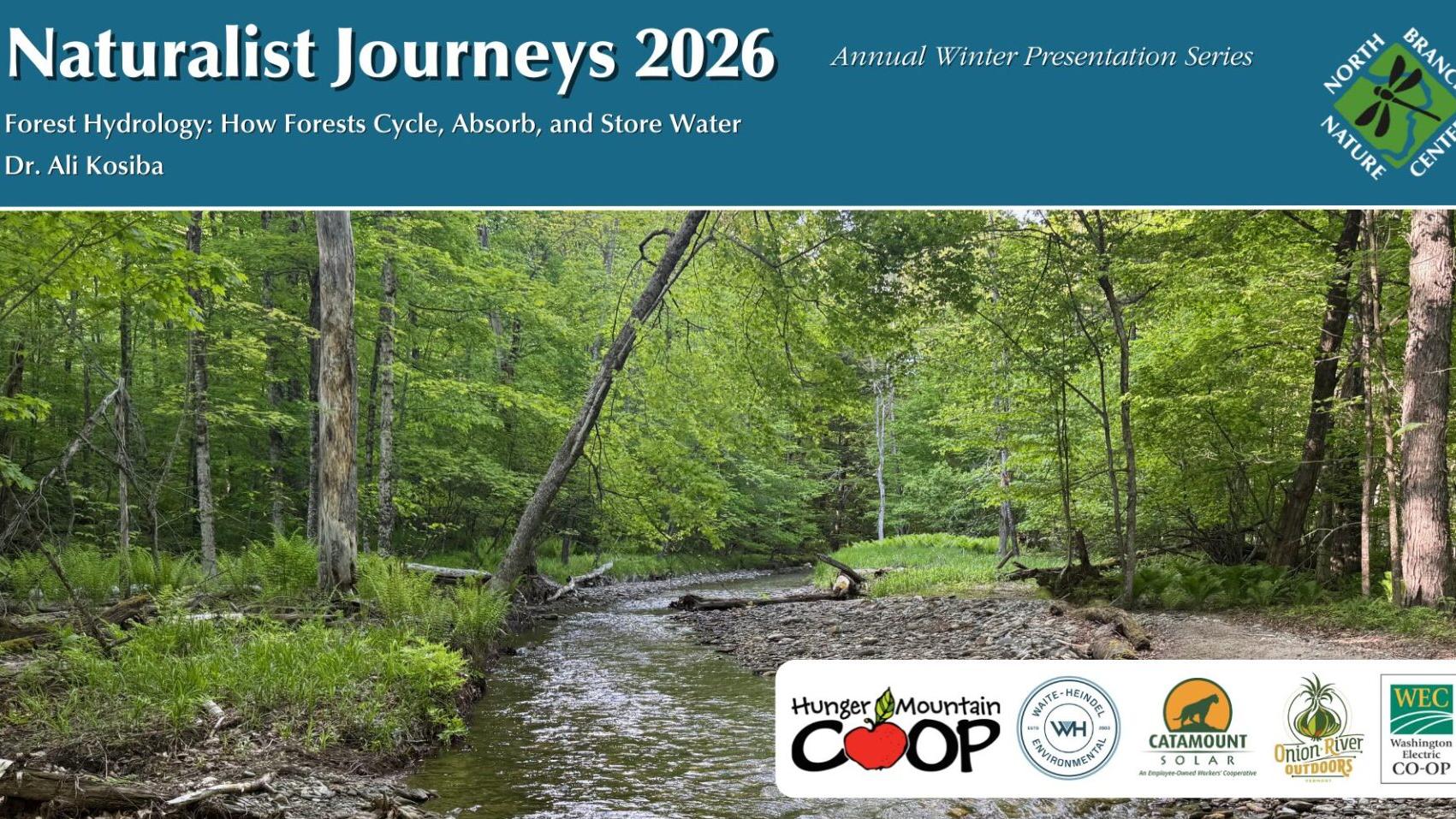
Free and in-person at NBNC | Register Here
Forests play a critical role in the hydrological cycle. As intense rainstorms become more frequent and powerful across the Northeast, forests are increasingly important in absorbing water and reducing runoff. Dr. Kosiba will explain how tree canopies, roots, and forest floors work together to slow, spread, and sink water—reducing soil erosion, downstream flooding, and infrastructure damage. She’ll highlight practical steps landowners, municipalities, and conservation groups can take to strengthen forests’ ability to buffer heavy rains and support climate-resilient landscapes.
About the Presenter: Dr. Alexandra (Ali) Kosiba is a forest ecophysiologist and Extension Assistant Professor at the University of Vermont, where she leads the Extension Forestry Program and serves as the State Extension Forester. Her work focuses on bridging research and practice, helping landowners, professionals, and the public understand forest ecology and sustainable management. Ali’s research and outreach center on tree responses to climate change, forest carbon dynamics, and ecosystem processes. She serves as a regional educator on forest carbon science and management, leading the Vermont Forest Carbon Inventory. Additionally, she addresses forest health challenges, including conservation planning for at-risk tree species, maintaining critical forest services, and long-term forest monitoring.
About our Naturalist Journeys 2026 Winter Presentation Series: This season is about understanding how our watersheds function, how our rivers flow, and which actions move us towards—or away from—becoming a more resilient riverside community. The series runs December through March.
 northbranchnaturec...vent/nj-2026-kosiba/
 802-229-6206
 northbranchnaturec...vent/nj-2026-kosiba/
802-229-6206
northbranchnaturec...vent/nj-2026-kosiba/
802-229-6206